The Impact of Hackathons and Tech Competitions on TCET Students’ Skills
 17th, September, 2026
A lot of learning in engineering happens outside the classroom. At Thakur College of Engineering and Technology (TCET), students regularly take part in hackathons, coding competitions, technical festivals, innovation challenges, research activities, and events such as Zephyr. These platforms give them opportunities to build projects, solve real problems, work in teams, and test their skills in competitive environments. Participation in initiatives such as the Smart India Hackathon, competitive programming contests, cybersecurity events, and AI-focused competitions has become a familiar part of the student experience.
The growing importance of these activities reflects how engineering careers have evolved. A few decades ago, academic performance and theoretical knowledge were enough to stand out. Today, employers look for much more. They want graduates who can think through problems independently, apply concepts to practical situations, communicate ideas clearly, collaborate with others, and adapt quickly when challenges arise. Technical knowledge still matters, but the ability to use that knowledge effectively has become just as important.
What Hackathons Actually Teach Students
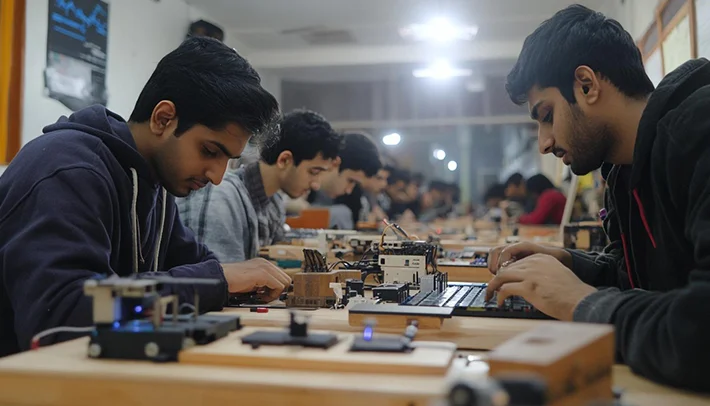
A hackathon is a time-bound competition where students work in teams to solve a problem, build a software or hardware solution, or develop a working prototype within a limited period. Some hackathons last a few hours, while others continue for an entire day or even a full weekend. Teams must divide responsibilities, make decisions quickly, overcome technical challenges, and present their work within the given timeframe. The focus shifts from learning concepts to applying them.
This becomes a valuable learning experience because real-world development rarely follows a perfect plan. Teams need to adapt continuously while keeping the project moving forward. In hackathons, students learn how to troubleshoot problems, manage time, collaborate effectively, and make technical decisions under pressure.
For many engineering students, a hackathon is also where they build their first complete project from idea to implementation. The experience of creating something functional within a short period teaches lessons that remain useful throughout their careers.
Technical Skills Develop Through Practical Problem-Solving
One of the biggest advantages of hackathons and technical competitions is that they place students in situations where they need to apply what they have learnt. They are presented with a problem and expected to figure out the solution themselves. They must choose the right technologies, decide what is realistic within the available time, prioritise important features, and make trade-offs throughout the development process.
This kind of work mirrors the way engineering projects operate in real life. Industrial problems are not built around academic subjects. A single project may involve programming, databases, cloud services, cybersecurity considerations, user interface design, networking, or even AI tools working together. Competitions give students exposure to this interconnected way of building systems.
Coding contests develop a different set of abilities. Instead of building products, they focus on logic, algorithms, efficiency, and analytical thinking. Participants solve programming challenges under strict time limits, learning how to approach problems methodically and write optimised solutions. These are the same skills that often appear during technical interviews, coding assessments, and placement processes.
Events such as Shastra Competitive Programming Competition (SCPC) 2026 at TCET provide students with opportunities to strengthen these problem-solving abilities while competing alongside peers from different institutions. Beyond rankings and awards, the real value often comes from learning new approaches, identifying gaps in understanding, and becoming more comfortable tackling unfamiliar technical challenges.
Hackathons Can Strengthen Internship and Placement Profiles
Technical competitions have also become valuable from a career perspective because they give students opportunities to showcase work beyond examinations and coursework. Students build projects, collaborate with teams, solve real problems, experiment with new technologies, and they can discuss this experience during interviews.
These competitions also encourage students to explore technologies outside the formal curriculum. While working on projects, many learn new frameworks, cloud services, development tools, AI platforms, cybersecurity concepts, or deployment practices simply because the project requires it. This self-directed learning often becomes one of the most valuable outcomes of participating in technical events.
Another advantage is exposure to the broader technology ecosystem. Many hackathons bring together students, mentors, startup founders, industry professionals, and technology companies in the same space. Workshops, mentoring sessions, project reviews, and networking opportunities allow students to understand how technical skills are applied in professional environments and what organisations expect from future engineers.
Technical Culture Matters Inside Engineering Colleges
The value of hackathons and competitions increases even further when they become part of a larger learning culture within a college. While classrooms provide the academic foundation, many technical skills develop through exploration, collaboration, and hands-on work outside regular lectures.
At Thakur College of Engineering and Technology, initiatives connected to research, coding culture, innovation activities, Smart India Hackathon participation, technical student chapters, and interdisciplinary project work have gradually expanded student exposure to practical engineering environments. The institute’s R&D Cell actively encourages participation in hackathons, ideathons, innovation competitions, and research-oriented technical activities.
Student communities such as ACM TCET, cybersecurity chapters like OWASP TCET, AI-focused communities, coding clubs, and technical fests contribute to this ecosystem through workshops, competitions, collaborative events, and peer-led learning initiatives. (LinkedIn)
Beyond Competition: The Bigger Learning Experience
The most valuable outcome of a hackathon or technical competition is the experience of building something from an idea and facing challenges. These events place students in situations that are difficult to recreate inside a traditional classroom. They learn how to work with different people, manage limited time, adapt when things do not go according to plan, and keep moving forward despite setbacks. Along the way, they gain a better understanding of their own strengths, interests, and areas for improvement.
For many students, a single competition can spark a deeper interest in a particular field. A project may introduce them to artificial intelligence, cybersecurity, cloud computing, data science, product development, or entrepreneurship for the first time. What begins as participation in an event often becomes the starting point for future projects, internships, research work, or even career choices.
As technology continues to evolve, the ability to learn, adapt, and solve unfamiliar problems will remain just as important as technical knowledge itself. Hackathons and tech competitions help develop exactly those qualities. They encourage students to move beyond theory, think creatively, collaborate effectively, and engage with engineering as an active process of building and problem-solving. That is why these experiences continue to play such an important role in engineering educations. They help students bridge the gap between what they learn in classrooms and what they will eventually be expected to do in the professional world.